


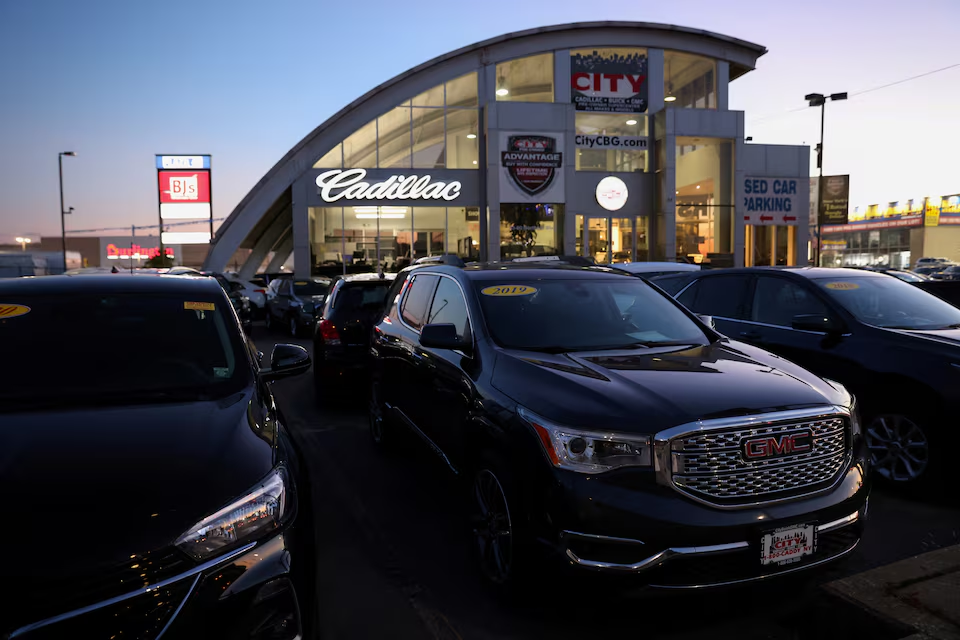
U.S. auto sales rose about 2.4% in 2025, signaling resilience in consumer demand despite supply-chain disruptions, tariffs, and regulatory changes. Automakers sold roughly 16.2 million vehicles last year, the fastest growth seen in recent years under challenging market conditions.
Several companies reported strong year-end sales. Toyota Motor saw an 8% increase in U.S. sales, supported by the popularity of affordable models—a segment largely abandoned by Detroit automakers. Hyundai Motor also posted an 8% rise, fueled by growing demand for hybrid vehicles.
General Motors (GM) reported a 5.5% sales increase, driven by large pickup trucks, SUVs, and electric vehicles. Stellantis faced a 3% decline compared with 2024, though the automaker gained momentum in the latter half of the year under new CEO Antonio Filosa.
The market faced multiple hurdles in 2025. Supply-chain disruptions, unpredictable tariffs, and the removal of a $7,500 electric-vehicle tax credit prompted some buyers to purchase vehicles early before costs rose. “To say it’s been a sales roller coaster of a year would be an understatement,” said Thomas King, president of OEM solutions at J.D. Power.
Despite these challenges, automakers managed to keep vehicle prices relatively stable. J.D. Power noted that the average retail price for a new vehicle in December reached $47,104, a 1.5% increase from the prior year, slightly below expectations.
Affordability remained a concern. High prices continue to limit some buyers, prompting calls for industry executives to testify before the Senate Commerce Committee on January 14. Hyundai North America CEO Randy Parker said 2026 would be “very challenging,” emphasizing that affordability will be a key factor in the market. Toyota executives also expect prices to rise as tariff-related costs affect production.
Electric vehicles (EVs) faced significant turbulence last year. The removal of consumer tax credits and changes in fuel economy regulations dampened demand, leading some manufacturers to scale back EV production plans. EVs accounted for only 6.6% of December retail sales, down from 11.2% the previous year, according to J.D. Power.
Despite these setbacks, Toyota and Hyundai plan to continue investing in EV development. The automakers aim to expand their hybrid and electric offerings, even as some competitors reduce EV production amid regulatory shifts and declining incentives.
Looking ahead, analysts remain divided on 2026 prospects. Cox Automotive predicts a 2.4% decline in sales due to slower economic growth and reduced EV incentives. Edmunds expects steady or slightly lower sales as tariffs and economic uncertainty weigh on buyers.
Some factors may support stability, however. Lower interest rates and maturing leases could boost demand, providing balance in a market still recovering from pandemic-related disruptions. “These dynamics set the stage for a more balanced and potentially stronger performance as 2026 progresses,” King said.
In summary, U.S. auto sales in 2025 demonstrated notable resilience. Growth was driven by hybrids, affordable vehicles, and strong SUV and truck demand. While EVs faced challenges, key automakers are continuing investments. The market’s ability to navigate tariffs, regulatory changes, and supply-chain issues highlights the industry’s adaptability and sets the stage for a cautiously optimistic 2026.
